At the forefront of modern business strategies lies AI Powered CRM, a game-changer in how companies interact with customers and manage relationships. From enhancing sales to improving customer service, this technology is reshaping the landscape of CRM systems.
Overview of AI-powered CRM
AI-powered CRM, or Artificial Intelligence-powered Customer Relationship Management, is a technology that utilizes AI algorithms to analyze customer data, automate tasks, and provide insights to improve customer interactions. It differs from traditional CRM systems by offering enhanced capabilities such as predictive analytics, personalized recommendations, and automation of repetitive tasks.
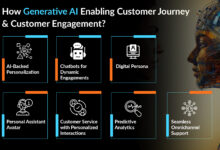



Benefits of AI-powered CRM
AI-powered CRM has been particularly beneficial for industries such as e-commerce, retail, and healthcare. These businesses have seen improvements in customer engagement, sales forecasting, and lead management through the use of AI algorithms.
Key Features and Functionalities
- Personalized Recommendations: AI-powered CRM can analyze customer behavior and preferences to provide personalized product recommendations, increasing sales and customer satisfaction.
- Predictive Analytics: By analyzing historical data and patterns, AI-powered CRM can predict future trends, identify potential leads, and optimize marketing campaigns.
- Automation of Tasks: AI-powered CRM automates routine tasks such as data entry, lead scoring, and email responses, saving time for sales and marketing teams.
- Real-time Insights: AI-powered CRM provides real-time insights into customer interactions, allowing businesses to respond promptly to customer queries and concerns.
Benefits of AI-powered CRM
AI-powered CRM systems offer a wide range of advantages for businesses looking to enhance their customer relationship management processes. By leveraging artificial intelligence technologies, companies can streamline operations, improve sales, and provide better customer service.
Enhanced Customer Relationship Management
AI enhances customer relationship management processes by analyzing data to predict customer behavior, preferences, and needs. This allows businesses to tailor their interactions with customers, personalize marketing campaigns, and offer targeted product recommendations.
Improved Sales and Customer Service
AI-powered CRM systems can improve sales by identifying potential leads, prioritizing opportunities, and automating follow-up processes. Additionally, AI tools can enhance customer service by providing instant responses to inquiries, resolving issues efficiently, and delivering personalized support.
AI Tools and Features
Common AI tools integrated into CRM systems include predictive analytics, chatbots, sentiment analysis, and machine learning algorithms. These tools help businesses automate tasks, gain insights from data, and optimize customer interactions.
Successful Implementations
Companies like Amazon, Salesforce, and IBM have successfully implemented AI-powered CRM systems to drive growth, improve customer satisfaction, and increase revenue. These businesses have leveraged AI technologies to enhance their CRM strategies and deliver exceptional customer experiences.
Cost-effectiveness
While the initial investment in AI-powered CRM solutions may be higher than traditional CRM systems, the long-term benefits in terms of efficiency, productivity, and customer satisfaction can outweigh the costs. AI-powered CRM systems offer scalability, automation, and predictive capabilities that can result in significant cost savings over time.
Impact on Customer Retention
AI has a positive impact on customer retention rates within a CRM environment by enabling businesses to anticipate customer needs, personalize interactions, and proactively address issues. By leveraging AI insights, companies can build stronger relationships with customers and foster loyalty over time.
Implementation of AI-powered CRM
Implementing AI-powered CRM in an organization can be a game-changer, revolutionizing the way businesses manage customer relationships. Here are some best practices, challenges, tips, key factors, data migration process, and examples of industries where AI-powered CRM has shown significant improvements.
Best Practices for Implementing AI-powered CRM
- Start with a clear strategy and defined objectives for implementing AI-powered CRM.
- Ensure buy-in from all stakeholders and provide adequate training to employees.
- Choose a reliable vendor with a proven track record in AI technology.
Challenges in Adopting AI-powered CRM
- Resistance to change from employees accustomed to traditional CRM systems.
- Data privacy and security concerns with the use of AI algorithms.
- Integration complexities with existing systems and workflows.
Tips for Successful Integration
- Gradual implementation to allow for adjustment and training.
- Regular communication and feedback loops to address concerns and optimize usage.
- Customization of AI algorithms to align with specific business needs.
Key Factors in Selecting AI-powered CRM Solution
- Scalability and flexibility to accommodate future growth and changes.
- Compatibility with existing infrastructure and systems for seamless integration.
- Robust data analytics capabilities for actionable insights and personalized customer interactions.
Data Migration and Training Process
- Cleanse and organize existing data for accurate migration to AI-powered CRM.
- Provide comprehensive training to employees on using AI features and interpreting insights.
- Continuous monitoring and refinement of data inputs to enhance algorithm performance.
Industries with Significant Improvements
- Retail: Enhanced customer segmentation and personalized recommendations.
- Finance: Improved fraud detection and risk assessment.
- Healthcare: Streamlined patient care and predictive analytics for treatment outcomes.
Ongoing Monitoring and Optimization
- Regularly review AI algorithms to ensure accuracy and relevance.
- Collect feedback from users and stakeholders for continuous improvement.
- Stay updated on AI advancements and industry best practices for optimization.
AI technologies used in CRM
AI technologies play a crucial role in enhancing the capabilities of CRM systems, enabling businesses to streamline their processes and improve customer relationships. Let’s explore the various AI technologies integrated into CRM systems and their significance.
Machine Learning in CRM
Machine learning algorithms are at the core of AI-powered CRM systems, allowing them to analyze vast amounts of data to predict customer behavior, identify trends, and personalize marketing strategies. These algorithms continuously learn from data inputs, enabling CRM systems to make accurate predictions and recommendations.
- Decision Trees: Decision trees are used in CRM to classify customers based on their behavior and characteristics. By analyzing customer data, decision trees help businesses understand customer segments and tailor their marketing efforts accordingly.
- Regression Analysis: Regression analysis is utilized in CRM to predict future customer behavior based on historical data. By identifying patterns and relationships in the data, businesses can anticipate customer needs and preferences.
- Clustering Algorithms: Clustering algorithms group customers with similar attributes together, allowing businesses to target specific customer segments with personalized marketing campaigns. This helps in improving customer engagement and retention.
Natural Language Processing in CRM
Natural Language Processing (NLP) technology enables CRM systems to analyze and interpret unstructured data such as customer feedback, emails, and social media interactions. By understanding the sentiment and context of customer communications, NLP helps businesses respond effectively and enhance customer satisfaction.
- Sentiment Analysis: Sentiment analysis tools in CRM analyze customer feedback to determine whether the sentiment is positive, negative, or neutral. This helps businesses address customer concerns promptly and improve overall customer experience.
- Text Classification: Text classification algorithms categorize customer inquiries and feedback into predefined categories, enabling businesses to route them to the appropriate department for quick resolution. This enhances operational efficiency and customer service quality.
- Named Entity Recognition: Named Entity Recognition technology identifies and extracts important information such as customer names, product names, and dates from unstructured text data. This helps businesses personalize interactions and offers for individual customers.
Personalization in AI-powered CRM
AI-powered CRM systems leverage artificial intelligence to enable personalized customer interactions, enhancing the overall customer experience. By analyzing vast amounts of data, AI can understand customer preferences, behaviors, and patterns, allowing businesses to tailor their approach to each individual.
Examples of Personalized Marketing Strategies
- Dynamic content customization: AI can analyze customer data in real-time to deliver personalized content, such as product recommendations or targeted offers, based on individual preferences and past interactions.
- Predictive analytics: By using AI algorithms, CRM systems can predict customer behavior and anticipate their needs, enabling businesses to proactively engage with customers and provide personalized solutions.
- Behavioral segmentation: AI-powered CRM can segment customers based on their behavior, enabling businesses to create targeted marketing campaigns that resonate with specific customer groups.
Impact of Personalization on Customer Engagement and Retention
Personalization in AI-powered CRM has a significant impact on customer engagement and retention. By delivering relevant and tailored experiences, businesses can foster stronger relationships with customers, leading to increased loyalty and repeat business. Customers are more likely to engage with personalized content and offers, ultimately driving higher satisfaction levels and long-term customer retention.
Data management in AI-powered CRM
AI plays a crucial role in managing and analyzing the large volumes of customer data that are generated in CRM systems. By leveraging AI technologies, companies can extract valuable insights from this data to make informed decisions and improve customer relationships.
Utilizing AI for Data Management
AI algorithms are capable of processing and analyzing vast amounts of data at a speed and scale that would be impossible for humans to achieve. This enables businesses to quickly identify patterns, trends, and correlations within their customer data, leading to more accurate predictions and personalized recommendations.
Importance of Data Quality and Accuracy
In AI-powered CRM, the quality and accuracy of data are paramount. Poor data quality can lead to incorrect insights and decisions, ultimately impacting the customer experience. AI helps in maintaining data integrity by cleaning and standardizing data, ensuring that businesses can rely on accurate information for their CRM processes.
Data Privacy and Security Concerns
As companies collect and analyze large amounts of customer data using AI, concerns around data privacy and security become more pronounced. It is essential for businesses to implement robust security measures to protect sensitive customer information and comply with data privacy regulations. Transparency around data usage and ensuring data encryption are crucial steps in mitigating these risks.
Customer insights and analytics
AI-powered CRM systems play a crucial role in generating valuable customer insights by analyzing vast amounts of data in real-time. These insights provide businesses with a deeper understanding of their customers’ behaviors, preferences, and needs, enabling them to tailor their marketing strategies and improve customer engagement.
AI analytics tools in CRM
AI analytics tools, such as machine learning algorithms and natural language processing, help businesses make data-driven decisions by identifying patterns and trends in customer data. These tools can analyze customer interactions across various channels, such as email, social media, and websites, to provide valuable insights into customer sentiment and behavior.
- Machine learning algorithms can segment customers based on their behavior and preferences, allowing businesses to create personalized marketing campaigns.
- Natural language processing can analyze customer feedback and sentiment to identify areas for improvement in products or services.
- Predictive analytics can forecast customer behavior, such as the likelihood of churn or the potential value of a customer, helping businesses proactively address customer needs.
Role of predictive analytics in forecasting customer behavior
Predictive analytics uses historical data and machine learning algorithms to forecast future customer behavior. By analyzing past interactions, purchase history, and demographic information, businesses can predict customer preferences, anticipate their needs, and personalize their marketing efforts.
- Identifying potential high-value customers allows businesses to focus their resources on retaining and engaging these customers.
- Predicting customer churn helps businesses take proactive measures to prevent customers from leaving, such as offering targeted promotions or improving customer service.
- Forecasting customer demand enables businesses to optimize inventory levels and plan marketing campaigns more effectively.
Automation and efficiency
AI plays a crucial role in automating various customer support processes within CRM systems, leading to increased efficiency and improved customer experience. Let’s delve into the specifics of how AI enhances automation in CRM platforms.
AI Chatbots for Customer Support
AI chatbots are a prime example of how automation can effectively handle customer inquiries and support tickets. These intelligent bots can engage with customers in real-time, providing instant responses and solutions to common queries.
- AI chatbots can offer 24/7 support, ensuring timely resolution of customer issues even outside regular business hours.
- They can handle a large volume of inquiries simultaneously, reducing wait times and improving overall customer satisfaction.
- By leveraging natural language processing (NLP) capabilities, AI chatbots can understand and respond to customer queries accurately.
Automating Customer Data Entry and Updating
Utilizing AI-driven automation for customer data entry and updating in CRM databases can streamline processes and ensure data accuracy.
- AI algorithms can automatically capture and enter customer data from various sources, eliminating the need for manual data entry.
- Automation helps in keeping customer profiles up-to-date by syncing information across different platforms and systems.
- By reducing manual data entry tasks, employees can focus on more strategic activities, enhancing productivity and efficiency.
Optimizing Sales Forecasting and Lead Scoring
AI algorithms can analyze vast amounts of data to optimize sales forecasting and lead scoring in CRM platforms, providing valuable insights to sales teams.
- AI can identify patterns and trends in customer data to predict future sales opportunities accurately.
- Automated lead scoring helps prioritize leads based on their likelihood to convert, enabling sales reps to focus on high-potential prospects.
- By leveraging AI for sales forecasting, businesses can make data-driven decisions and improve overall sales performance.
Integration of AI Tools for Scheduling Meetings and Follow-ups
Integrating AI tools for scheduling meetings and follow-ups in CRM workflows can streamline communication and enhance customer engagement.
- AI-powered scheduling tools can analyze calendars and suggest optimal meeting times based on availability and preferences.
- Automated follow-up reminders ensure timely communication with customers, reducing the risk of missed opportunities.
- By automating scheduling tasks, sales teams can focus on building relationships and closing deals more effectively.
Personalizing Marketing Campaigns with AI Automation
AI automation enables businesses to personalize marketing campaigns based on customer behavior data, delivering targeted and relevant content to customers.
- AI algorithms can analyze customer interactions and preferences to create personalized marketing messages and offers.
- Automated segmentation allows businesses to target specific customer segments with tailored marketing campaigns, increasing engagement and conversions.
- Personalization through AI automation can enhance customer relationships and drive brand loyalty over time.
Challenges in Implementing AI Automation in CRM Systems
While AI automation offers numerous benefits, there are challenges and considerations to address when implementing these technologies in CRM systems.
- Ensuring data accuracy and privacy protection is crucial when leveraging AI for automation in CRM, requiring robust data governance practices.
- Training AI models to understand and respond effectively to customer inquiries can be time-consuming and resource-intensive.
- Integrating AI tools seamlessly with existing CRM systems and workflows may require technical expertise and customization.
Integration with other systems
Integrating AI-powered CRM with existing software and tools is crucial for maximizing its potential and enhancing operational efficiency. This process involves setting up API connections, data mapping, and ensuring data synchronization to maintain consistency across integrated systems.
Setting up API connections and data mapping
- Start by identifying the APIs needed to connect the CRM with other systems.
- Map out the data fields in each system to determine how information will flow between them.
- Configure the API connections following the documentation provided by both the CRM and the other systems.
Importance of data synchronization
- Data synchronization ensures that information is up-to-date and consistent across all integrated systems.
- To maintain data integrity, schedule regular synchronization processes to avoid discrepancies.
- Implement data validation protocols to identify and address any synchronization errors promptly.
Role of middleware in communication
- Middleware acts as a bridge between the CRM and other systems, facilitating seamless communication.
- Select a middleware solution that supports the required integrations and provides data transformation capabilities.
- Configure middleware settings to enable efficient data exchange and real-time updates between systems.
Best practices for security and data privacy
- Encrypt data transmitted between systems to protect sensitive information from unauthorized access.
- Implement user authentication protocols to control access to integrated systems based on roles and permissions.
- Regularly audit and monitor data exchanges to detect any security vulnerabilities or breaches.
Comparison of integration methods
- Point-to-point integration offers direct connections between systems but may be complex to manage as the number of integrations increases.
- ETL (Extract, Transform, Load) tools provide a more scalable approach to integration by consolidating data from multiple sources before transferring it to the CRM.
- Choose the integration method based on the complexity of your systems and the scalability required for future growth.
Troubleshooting common integration issues
- Monitor system logs and error messages to identify the root cause of integration failures.
- Collaborate with technical support teams from the CRM and other systems to resolve connectivity issues promptly.
- Test integration processes in a staging environment before deploying changes to production to minimize downtime.
Key performance indicators for measuring success
- Track the time taken to synchronize data between systems to assess operational efficiency.
- Monitor error rates during data exchange to evaluate the reliability of integration processes.
- Analyze user feedback and system performance metrics to gauge the impact of integration on overall business productivity.
Case study: Successful integration for improved efficiency
Company X implemented AI-powered CRM integration with their inventory management system, streamlining order processing and inventory tracking. By automating data transfers and synchronizing customer information, they achieved a 30% reduction in order fulfillment time and improved customer satisfaction ratings.
Customer experience enhancement
AI-powered CRM plays a crucial role in enhancing the overall customer experience by providing personalized and efficient services. By leveraging AI technology, businesses can transform their customer service strategies and exceed customer expectations.
Using AI for personalized customer service
AI enables businesses to analyze customer data and behavior patterns to deliver personalized recommendations and solutions. This personalized approach enhances customer satisfaction and loyalty, leading to a better overall customer experience.
Importance of customer feedback and AI in improving CX
Customer feedback is essential for understanding customer needs and preferences. AI can analyze this feedback in real-time to make data-driven decisions and improve customer experience continuously. By incorporating AI into the feedback loop, businesses can address issues promptly and enhance customer satisfaction.
Successful AI implementations in customer experience management
Companies like Amazon and Netflix have successfully implemented AI to enhance customer experience. These platforms use AI algorithms to recommend products or content based on customer behavior, leading to increased engagement and satisfaction.
Predicting customer behavior for tailored experiences
AI can analyze customer data to predict behaviors and preferences accurately. By understanding customer needs in advance, businesses can tailor their offerings and interactions to provide a personalized experience that resonates with customers, ultimately improving customer satisfaction and loyalty.
Ethical considerations and AI in customer experience
While AI offers numerous benefits in enhancing customer experience, it is crucial to consider ethical implications. Businesses must ensure transparency, fairness, and accountability in AI algorithms to maintain customer trust and avoid biases that could impact the customer experience negatively.
Traditional vs. AI-powered customer service
AI-powered customer service offers faster response times, personalized interactions, and 24/7 availability compared to traditional methods. By automating routine tasks and providing intelligent solutions, AI enhances the efficiency and effectiveness of customer service, leading to improved customer satisfaction.
Integrating AI into existing CX strategies
To integrate AI effectively into existing customer experience strategies, businesses should start by identifying key touchpoints where AI can add value. By training AI models with relevant data and leveraging automation tools, businesses can enhance customer interactions and streamline processes for a seamless experience.
Impact of AI on customer loyalty and retention
AI plays a significant role in improving customer loyalty and retention rates by offering personalized experiences and proactive solutions. By analyzing customer behavior and preferences, businesses can anticipate needs, address issues promptly, and build lasting relationships with customers, leading to increased loyalty and retention.
Automation for streamlined customer interactions
AI automation streamlines customer interactions by handling routine inquiries, providing instant responses, and routing queries to the right channels efficiently. By automating processes, businesses can reduce wait times, improve service quality, and enhance overall customer satisfaction levels.
Future trends in AI-powered CRM
AI-powered CRM systems are continuously evolving to meet the changing needs of customers and businesses. Predicting the future trends in AI technology for CRM can provide valuable insights into the potential impact on customer relationship management. Let’s explore some key aspects shaping the future of AI-powered CRM.
Integration of AI with IoT devices
AI-powered CRM systems are likely to integrate with Internet of Things (IoT) devices to gather real-time data and provide personalized customer experiences. This will enable businesses to anticipate customer needs proactively and deliver customized solutions.
Enhanced predictive analytics
Future AI advancements in CRM will focus on improving predictive analytics capabilities. By analyzing vast amounts of data, AI algorithms will be able to forecast customer behavior more accurately, helping businesses make informed decisions and tailor their strategies accordingly.
Voice and chatbot integration
AI-powered CRM systems are expected to integrate advanced voice and chatbot capabilities for seamless customer interactions. Natural language processing (NLP) algorithms will enable chatbots to understand and respond to customer queries more effectively, enhancing overall customer satisfaction.
Emotional AI for customer sentiment analysis
The future of AI-powered CRM will involve the use of emotional AI to analyze customer sentiment and emotions. By understanding customer feelings and reactions, businesses can personalize interactions and address concerns in a more empathetic manner, ultimately improving customer relationships.
Explainable AI for transparency
As AI becomes more integrated into CRM systems, there is a growing need for transparency and accountability. Explainable AI algorithms will be developed to provide insights into how AI decisions are made, ensuring ethical use of data and fostering trust with customers.
Hybrid AI models for enhanced performance
Combining different AI algorithms such as machine learning, deep learning, and reinforcement learning will lead to the development of hybrid AI models in CRM. These models will offer enhanced performance and versatility, enabling businesses to adapt to dynamic customer demands effectively.
AI-driven hyper-personalization
AI-powered CRM systems will focus on hyper-personalization by leveraging advanced AI algorithms to create tailored customer experiences. By analyzing customer preferences, behaviors, and interactions, businesses can deliver highly personalized recommendations and services, driving customer loyalty and satisfaction.
Case studies and success stories
In this section, we will explore real-world examples of companies that have successfully leveraged AI-powered CRM to improve their operations and customer relationships.
Company A: Increased Sales and Customer Satisfaction
- Company A implemented AI-powered CRM to analyze customer data and identify personalized recommendations for upselling and cross-selling opportunities.
- By utilizing AI technologies, Company A was able to increase sales by 20% within the first year of implementation.
- Moreover, customer satisfaction ratings also saw a significant improvement, with a 15% increase in positive feedback and reduced churn rate.
Company B: Enhanced Lead Management and Conversion Rates
- Company B integrated AI-powered CRM to streamline lead management processes and prioritize high-quality leads based on predictive analytics.
- As a result, the conversion rates for Company B improved by 30%, leading to a higher ROI on marketing campaigns and sales efforts.
- The automated lead nurturing system also helped in reducing response times and improving overall efficiency in the sales pipeline.
Key Takeaways and Lessons Learned
- Personalization is key: Companies that tailor their customer interactions based on AI insights see better engagement and retention rates.
- Data-driven decision-making: Leveraging AI for data analysis allows businesses to make informed decisions and optimize their strategies for better results.
- Continuous optimization: Successful AI-powered CRM implementations require ongoing monitoring and fine-tuning to adapt to changing customer needs and market dynamics.
Training and skill development
In today’s rapidly evolving business landscape, professionals working with AI-powered CRM systems must possess a unique set of skills and knowledge to effectively leverage the technology. Let’s delve into the key requirements for individuals looking to enhance their expertise in this domain.
Technical Skills
- Proficiency in programming languages such as Python, R, or Java is essential for manipulating and analyzing data within AI-powered CRM systems.
- Familiarity with data analysis tools like SQL, Tableau, or Power BI is crucial for interpreting customer data and deriving actionable insights.
- Understanding machine learning algorithms and techniques enables professionals to build predictive models for personalized customer interactions.
Soft Skills
- Effective communication skills are vital for conveying insights derived from AI analyses to non-technical stakeholders within the organization.
- Problem-solving abilities are necessary to address complex challenges that arise during the implementation and optimization of AI-powered CRM systems.
- Adaptability and a willingness to learn are key traits for staying abreast of the latest advancements in AI technology and CRM practices.
Recommended Courses and Certifications
- LinkedIn Learning offers courses like “AI for CRM: Enhancing Customer Relationships” to deepen understanding of AI integration in CRM.
- Certifications such as Microsoft Certified: Dynamics 365 + Power Platform Solution Architect validate expertise in AI-powered CRM solutions.
- Workshops like “AI in Customer Relationship Management” by industry experts provide hands-on experience with AI tools and techniques.
Case Studies and Examples
- In a case study by a leading e-commerce company, data scientists with a blend of programming skills and domain knowledge successfully implemented AI algorithms to personalize customer recommendations, leading to a significant increase in sales.
- A marketing team utilized their strong communication skills to collaborate with AI engineers in developing a predictive analytics model that enhanced customer segmentation, resulting in improved campaign targeting and ROI.
- Professionals who combined technical expertise with problem-solving abilities were able to overcome data integration challenges and implement AI-driven chatbots in their CRM system, streamlining customer support processes.
Epilogue
In conclusion, AI Powered CRM offers a multitude of benefits for businesses looking to streamline their processes and enhance customer experiences. By leveraging AI technologies, companies can stay ahead of the curve and drive success in today’s competitive market.
